

Jinan Power Flight International Company Ltd.: Your Professional Saw Blade Manufacturer!
Jinan Power Flight International Company Ltd. is a global manufacturer and supplier dedicated to the innovation, production, and worldwide distribution of premium saw blades. The company's main products include saw blade, grinding tools, hole cutting tools, glass cutting tools, etc.
-
![Fine Tooth Ceramic Cutting Blade]() Fine Tooth Ceramic Cutting BladePower Flight International, 25 Years of Expertise in Saw Blades.view more
Fine Tooth Ceramic Cutting BladePower Flight International, 25 Years of Expertise in Saw Blades.view more
Specialist in Ceramic Cutting Blade.
Power Flight International's fine tooth ceramic cutting blade are developed using the latest technological... -
![Net Wave Ceramic Cutting Blade]() Net Wave Ceramic Cutting BladePower Flight International is a professional manufacturer of the circular saw blade, have 25 years of expertise in ceramic cutting blades.view more
Net Wave Ceramic Cutting BladePower Flight International is a professional manufacturer of the circular saw blade, have 25 years of expertise in ceramic cutting blades.view more
Power Flight International net wave ceramic cutting blade is developed and produced using... -
![Wavy Tooth Stone Cutting Blade]() Wavy Tooth Stone Cutting BladePower Flight International, specializing in stone cutting saw blade industry for 25 years, stone cutting saw blade experts. Power Flight International wavy tooth stone cutting blade, using the latest scientific and technological...view more
Wavy Tooth Stone Cutting BladePower Flight International, specializing in stone cutting saw blade industry for 25 years, stone cutting saw blade experts. Power Flight International wavy tooth stone cutting blade, using the latest scientific and technological...view more -
![Bevel Tooth Stone Cutting Blade]() Bevel Tooth Stone Cutting BladePower Flight International – A 25 years expert in stone cutting blades.view more
Bevel Tooth Stone Cutting BladePower Flight International – A 25 years expert in stone cutting blades.view more
Power Flight International’s bevel tooth stone cutting blade — engineered with cutting-edge technology to solve cutting challenges, boost productivity, cut... -
![Flat Tooth Groove Cutting Blade]() Flat Tooth Groove Cutting BladePower Flight International, 25 ears of expertise in saw blade.view more
Flat Tooth Groove Cutting BladePower Flight International, 25 ears of expertise in saw blade.view more
Specialist in Groove Cutting Blade.
Power Flight International's flat tooth groove cutting blade is developed using the latest technological advancements to... -
![Straight Wave Guard Tooth Groove Cutting Blade]() Straight Wave Guard Tooth Groove Cutting BladePower Flight International – Dedicated to the groove cutting blade industry for 25 years. Your expert in precision cutting solutions..view more
Straight Wave Guard Tooth Groove Cutting BladePower Flight International – Dedicated to the groove cutting blade industry for 25 years. Your expert in precision cutting solutions..view more
Designed with the latest innovations, Power Flight International’s straight wave guard tooth... -
![9inch 80Teeth Woodworking Saw Blade]() 9inch 80Teeth Woodworking Saw Blade9inch 80Teeth Woodworking Saw Bladeview more
9inch 80Teeth Woodworking Saw Blade9inch 80Teeth Woodworking Saw Bladeview more
Product Model: 49009
Product Specifications: 230-80T-2.4-25.4
Segment Profile: ATB(Alternate Top Bevel) 80T -
![9inch 60Teeth Woodworking Saw Blade]() 9inch 60Teeth Woodworking Saw Blade9inch 60Teeth Woodworking Saw Bladeview more
9inch 60Teeth Woodworking Saw Blade9inch 60Teeth Woodworking Saw Bladeview more
Product Model: 49008
Product Specifications: 230-60T-2.4-25.4
Segment Profile: ATB(Alternate Top Bevel) 60T -
![9inch 40Teeth Woodworking Saw Blade]() 9inch 40Teeth Woodworking Saw Blade9inch 40Teeth Woodworking Saw Bladeview more
9inch 40Teeth Woodworking Saw Blade9inch 40Teeth Woodworking Saw Bladeview more
Product Model: 49007
Product Specifications: 230-40T-2.4-25.4
Segment Profile: ATB(Alternate Top Bevel) 40T -
![8inch 40Teeth Woodworking Saw Blade]() 8inch 40Teeth Woodworking Saw Blade8inch 40Teeth Woodworking Saw Bladeview more
8inch 40Teeth Woodworking Saw Blade8inch 40Teeth Woodworking Saw Bladeview more
Product Model: 49005
Product Specifications: 200-40T-2.4-25.4
Segment Profile: ATB(Alternate Top Bevel) 40T -
![7inch 40Teeth Woodworking Saw Blade]() 7inch 40Teeth Woodworking Saw Blade7inch 40Teeth Woodworking Saw Bladeview more
7inch 40Teeth Woodworking Saw Blade7inch 40Teeth Woodworking Saw Bladeview more
Product Model: 49003
Product Specifications: 180-40T-2.2-25.4
Segment Profile: ATB(Alternate Top Bevel) 40T -
![230mm/9inch Segmented Saw Blade For Stone]() 230mm/9inch Segmented Saw Blade For Stone230mm/9inch Segmented Saw Blade for Stoneview more
230mm/9inch Segmented Saw Blade For Stone230mm/9inch Segmented Saw Blade for Stoneview more
Product Model: B01-67
Product Specifications: 230D-22.23H-18X-2.8T
Segment Profile: Segmented Tooth
Cutting Method: Dry&Wet Cutting


Why choose us?
Professional team
Power Flight International boasts a dedicated team of 50 professional technicians committed to delivering unparalleled expertise and rapid response, ensuring a seamless and worry-free cooperation experience.
Quality control
With a 5,000 square meters' modern facility and five advanced production lines, we adhere to the ISO 9001 Quality Management System to ensure stricter quality control, more stable production supply, faster order fulfillment, ample inventory to meet your market demands.
Customized services
We offer comprehensive customized solutions, providing tailor-made saw blade services to meet your exact requirements-including material, tooth profile, dimensions, and all critical details-ensuring perfect adaptation to your specific working conditions and eliminating all operational challenges.
Advanced manufacturing technology
Through independent research and development in ultra-hard coating technology and low-noise tooth design, combined with advanced manufacturing processes including hot-pressing technology and spherical metal powder encapsulation granulation to enhance our blades' sharpness, durability, and cutting efficiency - eliminating all your post-purchase concerns.
Benefits of Saw Blade
Safe and easy to use
One of the most appealing qualities of a saw blade is its user-friendly nature. Unlike complex tools that require lengthy training, saw blades for metal cutting are straightforward and intuitive.
Learn quickly
Beginners can achieve professional-grade results without an overwhelming learning curve. Whether you’re cutting through steel pipes or aluminum sheets, you’ll appreciate how quickly you can learn how to use a saw blade.
Safety features
One common feature of saw blades is the blade guard. It minimizes the risk of accidental contact with the spinning blade by covering it when the saw is not in use and during various movements. Many models also include emergency stop switches, allowing users to quickly shut off the saw as needed. Together, these safety features ensure greater control and peace of mind for users.
Speedy project completion
With less time spent on setup and figuring out complicated tools, you can focus on cutting items carefully and quickly. The ease of use makes saw blades an ideal choice for completing metalwork projects faster without sacrificing quality.
Project versatility
Saw blades are among the most versatile metal-cutting tools because they can accommodate a variety of metalworking projects.
Product Specifications
|
Model |
Specification |
Tooth |
Diameter |
Core Size |
Cutting head Size |
Cutting head Thickness |
Weight |
Package |
|
A101 |
100D-20H-8X-1.0T |
Fine Tooth |
100mm |
20mm |
8mm |
1.0mm |
60g |
Blister Package 20pcs/box 240pcs/cartoon |
|
A102 |
102D-20H-8X-1.2T |
102mm |
20mm |
8mm |
1.2mm |
60g |
||
|
A103 |
105D-20H-10X-1.2T |
105mm |
20mm |
10mm |
1.2mm |
70g |
||
|
A104 |
108D-20H-8X-1.2T |
108mm |
20mm |
8mm |
1.2mm |
70g |
||
|
A105 |
110D-20H-13X-1.3T |
110mm |
20mm |
13mm |
1.3mm |
80g |
||
|
A107 |
115D-22.23H-9X-1.3T 125D-22.23H-10X-1.4T |
115mm 125mm |
22.23mm |
9mm 10mm |
1.3mm 1.4mm |
80g 90g |
Choosing the Right Saw Blade
Understanding saw blade tooth configuration
The configuration of saw blade teeth significantly impacts the performance and suitability of the blade for specific metalworking tasks. Tooth configuration encompasses several aspects, including the tooth shape, gullet size, and tooth angle. Each of these components works in concert to influence the cutting action, chip removal, and overall finish quality of the cut.
Tooth count and metal thickness
The relationship between tooth count and metal thickness is crucial in achieving optimal cutting performance. A saw blade with a higher tooth count is usually a better option for cutting thinner metals. This is because more teeth per inch (TPI) results in smaller, finer cuts that require less force and generate less vibration, yielding a smoother finish. For example, a blade with 18 TPI is suited for thin-gauge materials like sheet metal or thin-walled tubing, ensuring clean edges without causing material distortion.


The role of tooth geometry
Tooth geometry plays a fundamental role in determining the effectiveness of a saw blade for specific metalworking applications. The geometry of a saw blade's teeth encompasses various elements such as the bevel, pitch, and tooth shape. These elements work meticulously to optimize cutting performance based on the type of material and the desired finish quality.
Material compatibility
When trying to figure out how to choose the right saw blade, you want to consider the material on the tip of the teeth as well as the number of teeth and the spacing between them. Choosing a saw blade with the correct material compatibility is crucial for achieving the best results in metalworking projects. Different metals have unique properties that necessitate specific types of saw blades to ensure clean, efficient cuts without damaging the material or the blade.
Packaging and Shipping
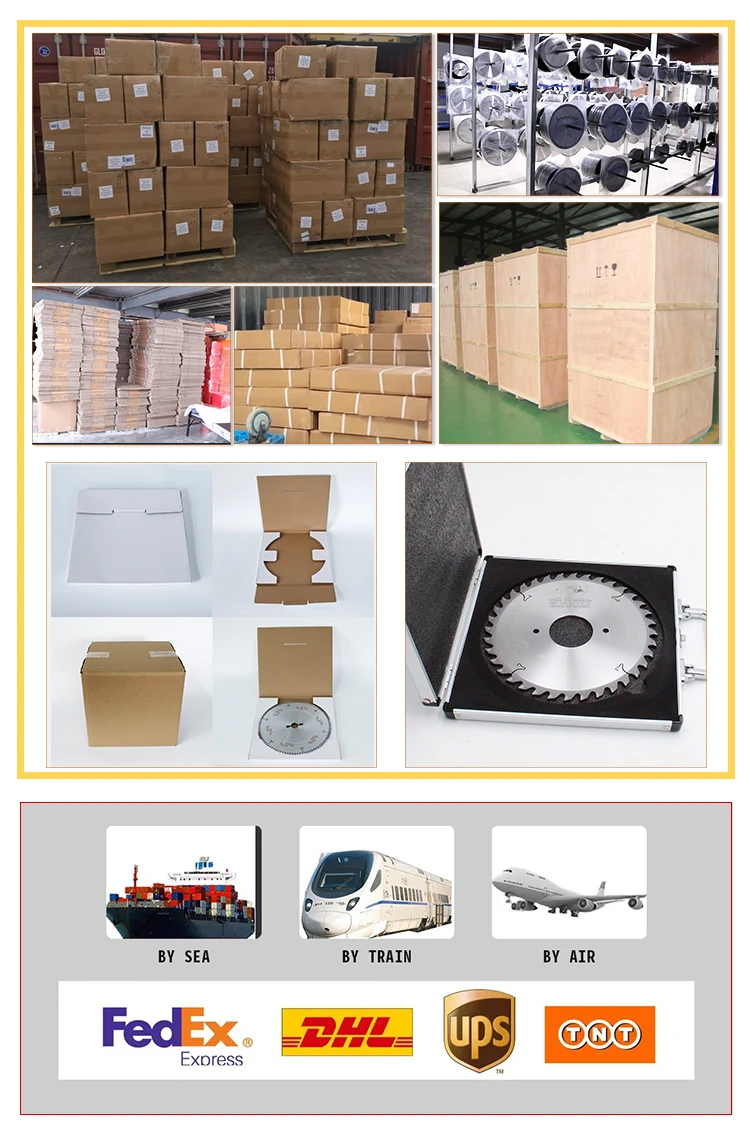
FAQ
We're well-known as one of the leading saw blade suppliers in China. Please feel free to buy high quality saw blade for sale here from our factory. Good service and reasonable price are available.


